
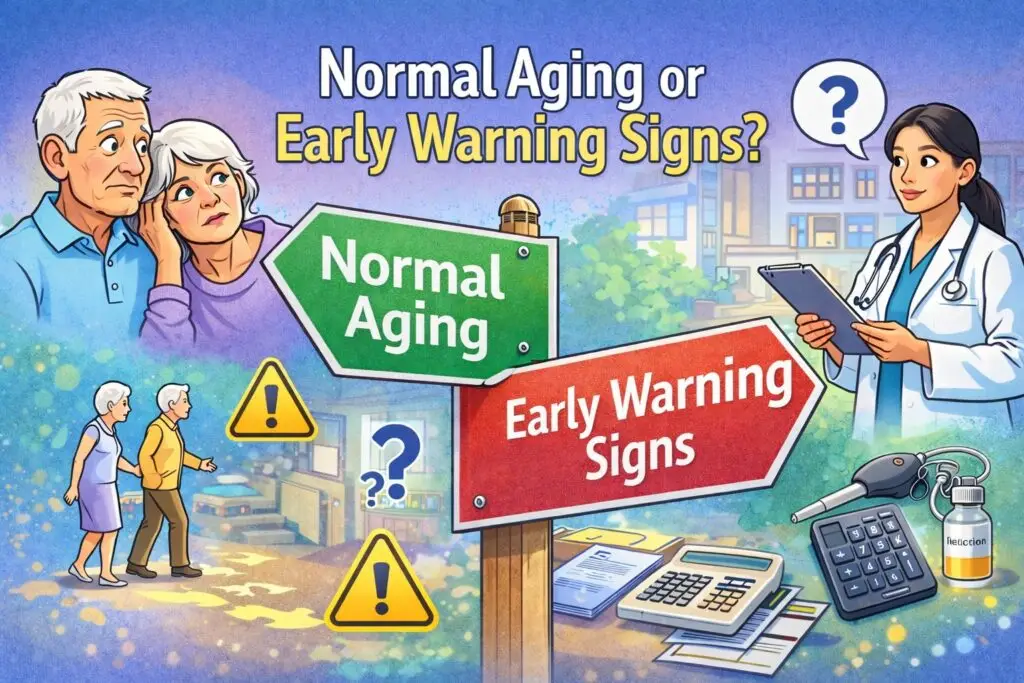
Are These Changes Normal?
Let me guess—you’ve caught yourself wondering, “Wait… have I always moved this slow?” Or maybe you walked into a room and completely forgot why you went there (again).
You’re not alone. I’ve had this exact conversation with countless clients and families over the years, and honestly, with my own relatives too. The tricky part? Some changes are normal aging… and some are early warning signs you don’t want to ignore.
So let’s talk about it. No panic, no fluff, just real talk.
What’s Actually “Normal” as We Age?
Aging doesn’t mean falling apart. But it does mean change. The key lies in knowing what’s expected versus what signals something deeper.
The “Normal” Stuff (Yes, This Happens to All of Us)
You might notice:
- Slightly slower walking speed
- Occasional forgetfulness (like misplacing keys)
- Mild joint stiffness in the morning
- Taking longer to learn new tech (looking at you, smartphones…)
Research from the National Institute on Aging shows that processing speed and reaction time naturally decline with age, even in healthy adults.
That said—these changes should be gradual, mild, and not disruptive to your daily life.
So if you’re still independent and functioning well? You’re likely in the normal zone.
But here’s where things get interesting…
Early Signs of Mobility Decline (That People Often Miss)
Mobility decline doesn’t show up overnight. It sneaks in quietly, like a bad sequel no one asked for.
Subtle Red Flags to Watch For
- You avoid stairs more than you used to
- You feel unsteady on uneven ground
- You need furniture or walls for balance
- You take shorter steps or shuffle slightly
- You get tired faster when walking
Ever catch yourself thinking, “I just don’t feel as steady lately”? That’s your body trying to tell you something.
Why This Matters (More Than You Think)
Here’s the reality:
Mobility decline increases fall risk—and falls are one of the leading causes of injury in older adults.
According to the CDC:
- 1 in 4 adults over 65 falls each year
- Falls often lead to hospitalization and long-term loss of independence
Not exactly stats you want to ignore, right?
Mild Cognitive Changes: Normal or Something More?
Let’s talk about the brain side of things—because this one freaks people out fast.
Normal Cognitive Changes
You might experience:
- Forgetting names temporarily
- Walking into a room and losing your train of thought
- Taking longer to recall words
Annoying? Yes. Dangerous? Usually not.
Early Warning Signs of Concern
Now here’s where I lean in a bit closer…
Watch for:
- Repeating the same questions often
- Struggling with familiar tasks (like managing bills)
- Getting lost in familiar places
- Difficulty following conversations
- Noticeable personality or mood changes
If you’re thinking, “That sounds like someone I know…”—don’t brush it off.
The Alzheimer’s Association emphasizes that early detection of cognitive decline leads to better outcomes and planning.
The Overlap: Mobility + Cognition
Here’s something most people don’t realize:
Mobility decline and cognitive decline often show up together.
Yep. Not a coincidence.
Why They’re Connected
Your brain controls movement, balance, and coordination. When cognitive processing slows down, physical movement often follows.
Studies published in journals like JAMA Neurology show that:
- Slower walking speed can predict cognitive decline
- Balance issues often correlate with early brain changes
Wild, right?
So when someone says, “They’re just getting older,” I usually push back a little. Sometimes aging explains it. Sometimes it doesn’t.
Common Misconceptions (Let’s Clear These Up)
I hear these all the time:
“It’s just old age.”
Not always.
Aging should not cause sudden or noticeable decline.
“They’ll bounce back.”
Maybe—but only if you address the root cause. Ignoring symptoms rarely fixes them.
“We don’t want to overreact.”
Fair. But waiting too long often creates bigger problems. Early action beats late regret every time!
What You Can Do Right Now (Practical, No-Nonsense Steps)
You don’t need to overhaul your life overnight. But you do need to stay proactive.
1. Pay Attention to Patterns
Ask yourself:
- Are changes gradual or sudden?
- Do they interfere with daily life?
- Are they getting worse over time?
If the answer leans toward “yes,” it’s time to act.
2. Keep the Body Moving
Movement = independence.
Focus on:
- Strength training (2–3 times per week)
- Balance exercises (like standing on one leg)
- Daily walking
Even small improvements can reduce fall risk significantly.
3. Challenge the Brain
Your brain loves a good workout too.
Try:
- Puzzles or games
- Learning something new
- Social interaction (seriously underrated)
Ever notice how sharp people stay when they stay engaged?
4. Get a Professional Assessment
This one gets avoided way too often.
- Primary care physician
- Physical therapist
- Neurologist (if needed)
Early assessments don’t label you—they empower you.
5. Consider Support Before You “Need” It
This might sound blunt, but I’ll say it anyway:
The best time to introduce help is before things get bad.
Home care services can:
- Provide mobility support
- Monitor subtle changes
- Keep people active and engaged
And no—it doesn’t mean giving up independence. It actually helps preserve it.
When Should You Be Concerned?
Let’s simplify this.
You should take things seriously if you notice:
- Rapid decline over weeks or months
- Frequent falls or near-falls
- Memory issues affecting daily tasks
- Behavior or personality changes
If your gut says something feels off… trust it.
You’ve lived long enough to know when something isn’t right.
A Quick Reality Check (Because Someone Has to Say It)
Ignoring early signs doesn’t keep you independent—it speeds up losing it.
I’ve seen both sides:
- People who acted early and stayed in control of their lives
- People who waited too long and had fewer options
Guess which group had better outcomes?
Exactly.
Final Thoughts: So… Are These Changes Normal?
Sometimes yes. Sometimes no.
That’s the honest answer.
But here’s what matters most:
Normal aging should not steal your confidence, safety, or independence.
If you notice small changes, don’t panic—but don’t ignore them either.
Stay curious. Stay proactive. Stay honest with yourself.
And hey—if you’re asking this question in the first place?
You’re already ahead of most people 🙂
Your Next Step
Take 5 minutes today and ask yourself:
- What’s changed in the last 6–12 months?
- What feels harder than it used to?
- What would I regret ignoring?
Then do something about it.
Even a small step today can protect your independence tomorrow.